


The lilienthal telescope construction
The effect and function of concave mirrors were already known in ancient times.
For astronomical observation, aside from a vague description by Leonardo da Vinci, a mirror-lens combination was first used at the beginning of the 17th century by the Jesuit priest Nicolaus Zucchius.
Around 1660 and 1670, James Gregory in England and Laurent Cassegrain in France developed optical mirror systems whose principles are still in use today.
In 1668, Isaac Newton invented the telescope type that is still particularly favored by amateur astronomers today: the so-called Newtonian telescope.
For more convenient observation, a small flat secondary mirror is used to direct the focal cone laterally out of the tube near the eyepiece.
The reflecting telescopes used and largely self-built by Johann Hieronymus Schroeter were exclusively Newtonian telescopes.
For large diameters, technological limitations required the mirrors to be cast from a copper/tin alloy, with their surfaces ground and polished. The intended mirror surface was to be a rotational paraboloid! The reflectivity of these mirrors was only slightly above 50%, as the vapor deposition of highly reflective coatings was not yet possible. Moreover, the colors of the observed objects were influenced by the polish and the mirror material.
In Lilienthal, an attempt was successfully made to counteract this drawback by adding arsenic, which resulted in a bright, glossy white surface.
The costly experiments were conducted by J.G.F. Schrader, a professor of physics and chemistry from Kiel, who resided at Schroeter’s observatory for more than a year in 1791.
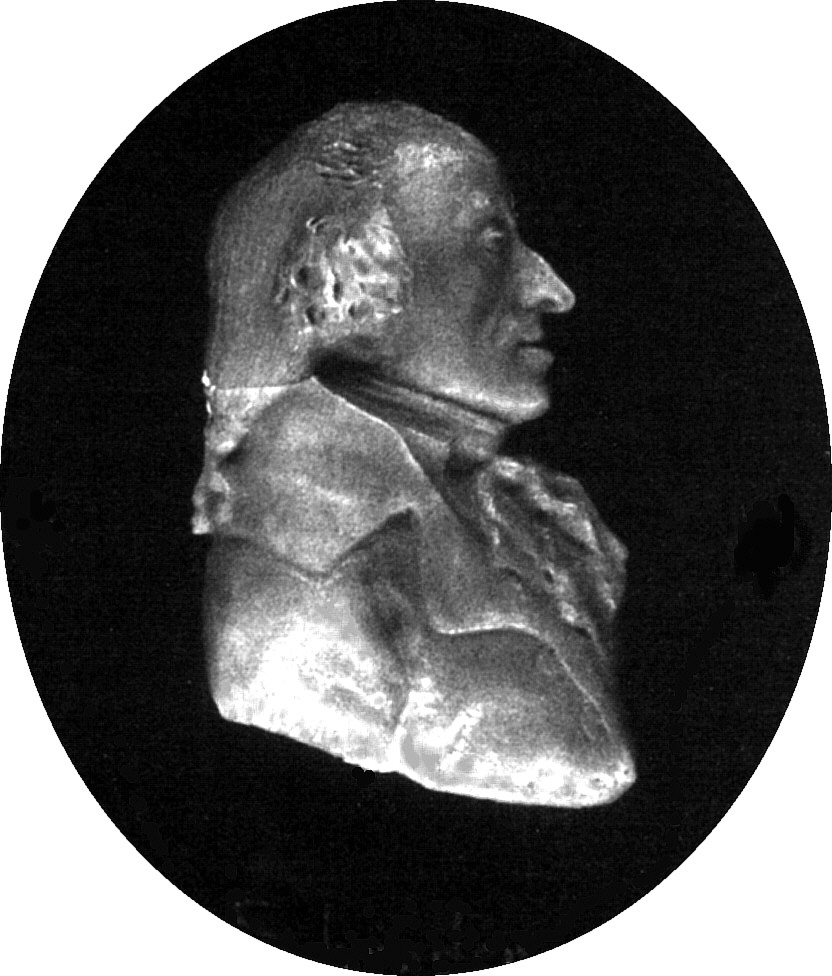
Johann Gottlieb Schrader, wax relief by J. Chr. W. Wunderlich (1795)
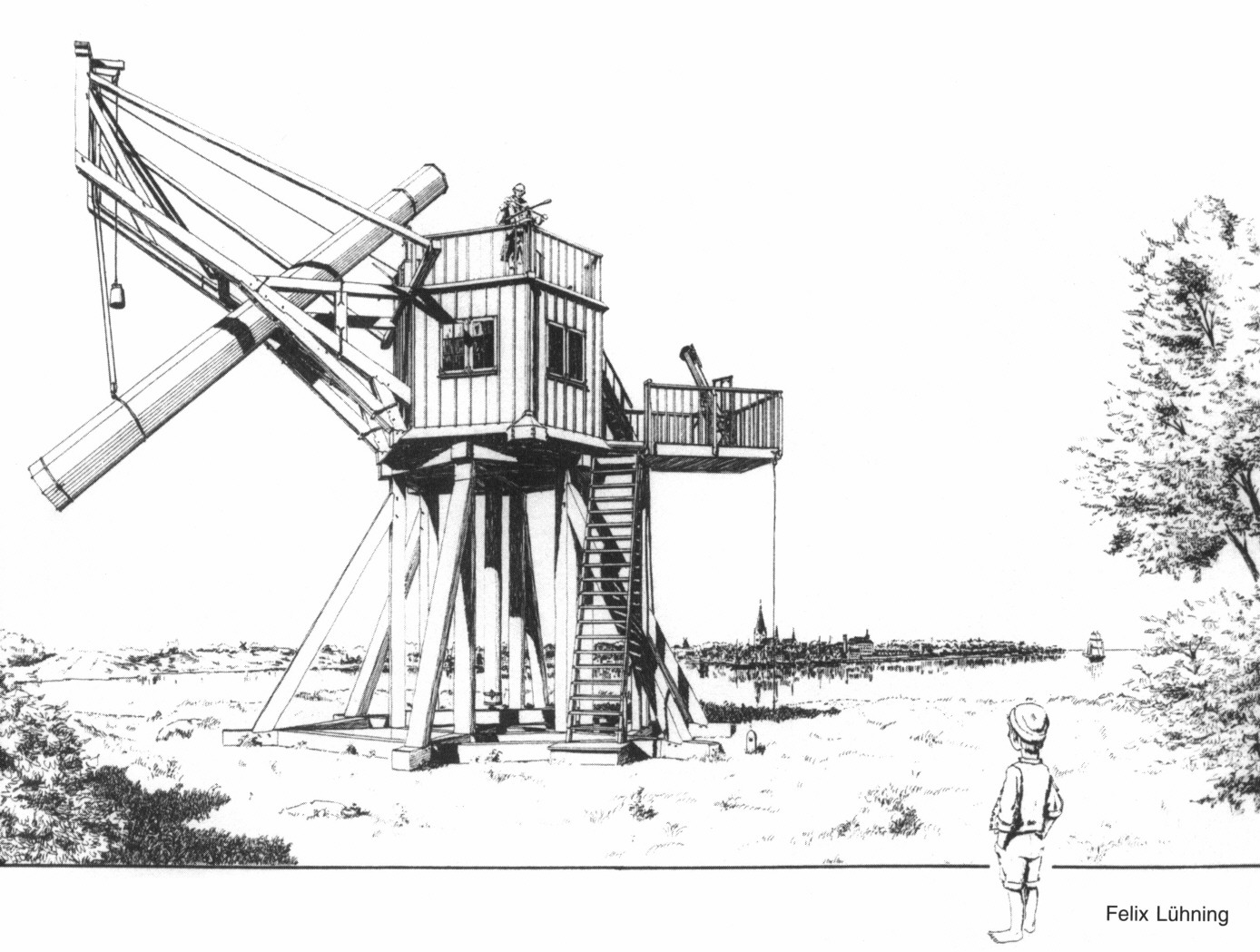
26-foot reflector by Schrader (1794)
Under Schrader’s direction, several 7-foot telescopes, a 12-foot telescope, a 13-foot telescope, and the first mirror for the 27-foot grand telescope were built in Lilienthal. Schrader also crafted the mirror for his own 26-foot telescope in Lilienthal. The reflector was set up at the Kiel Fjord in 1794.
Schrader wanted to replicate reflecting telescopes based on the design developed by Wilhelm Herschel in England, which were significantly more affordable than Herschel’s instruments.
At the turn of the 19th century, Herschel was the only serial manufacturer of Newtonian reflecting telescopes. Schroeter had previously purchased the mirrors and mechanical components for a 7-foot telescope from Herschel, while building the mount himself. A detailed description of the instrument exists! (The focal length of the telescope was given in feet; one foot is approximately 30 cm).
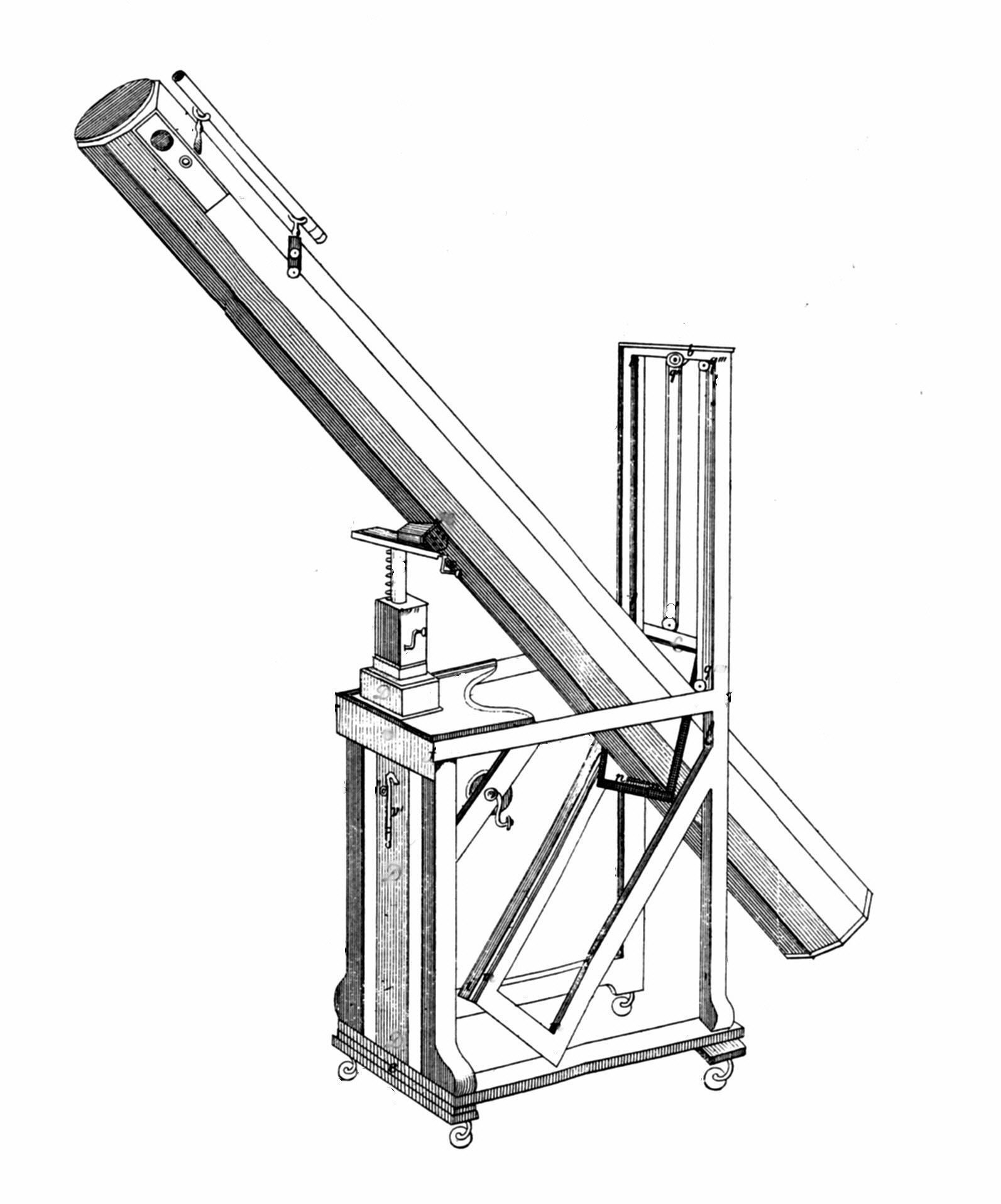
Drawing of the 7-foot Herschel telescope by J. H. Schroeter (1788)
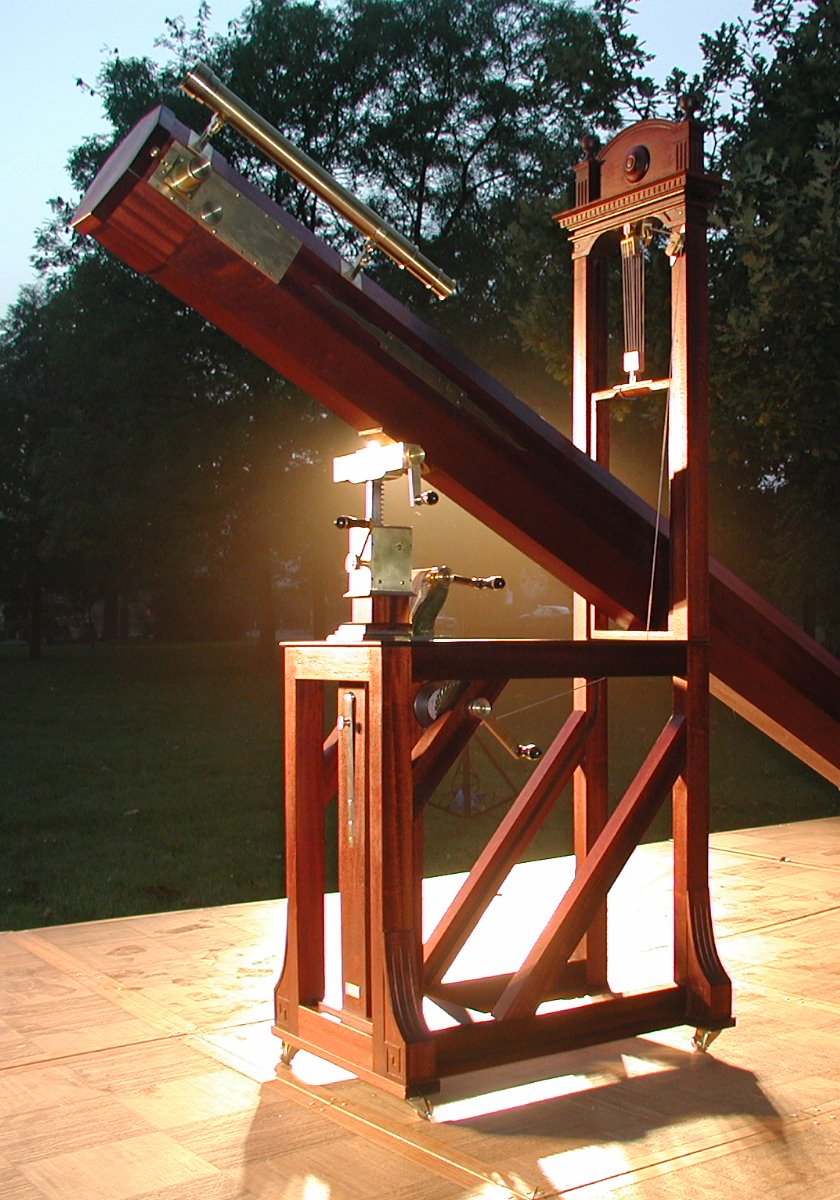
Replica of the 7-foot Schrader reflecting telescope by H.-J. Leue from the year 2001, Photo: E. J. Stracke, AVL
That means the tracking of the azimuthally mounted instrument—via a rack for altitude adjustment and a spindle drive for compensating the Earth’s rotation—as well as the eyepiece drive and the primary mirror holder, are identical to the smaller instruments developed by Herschel.
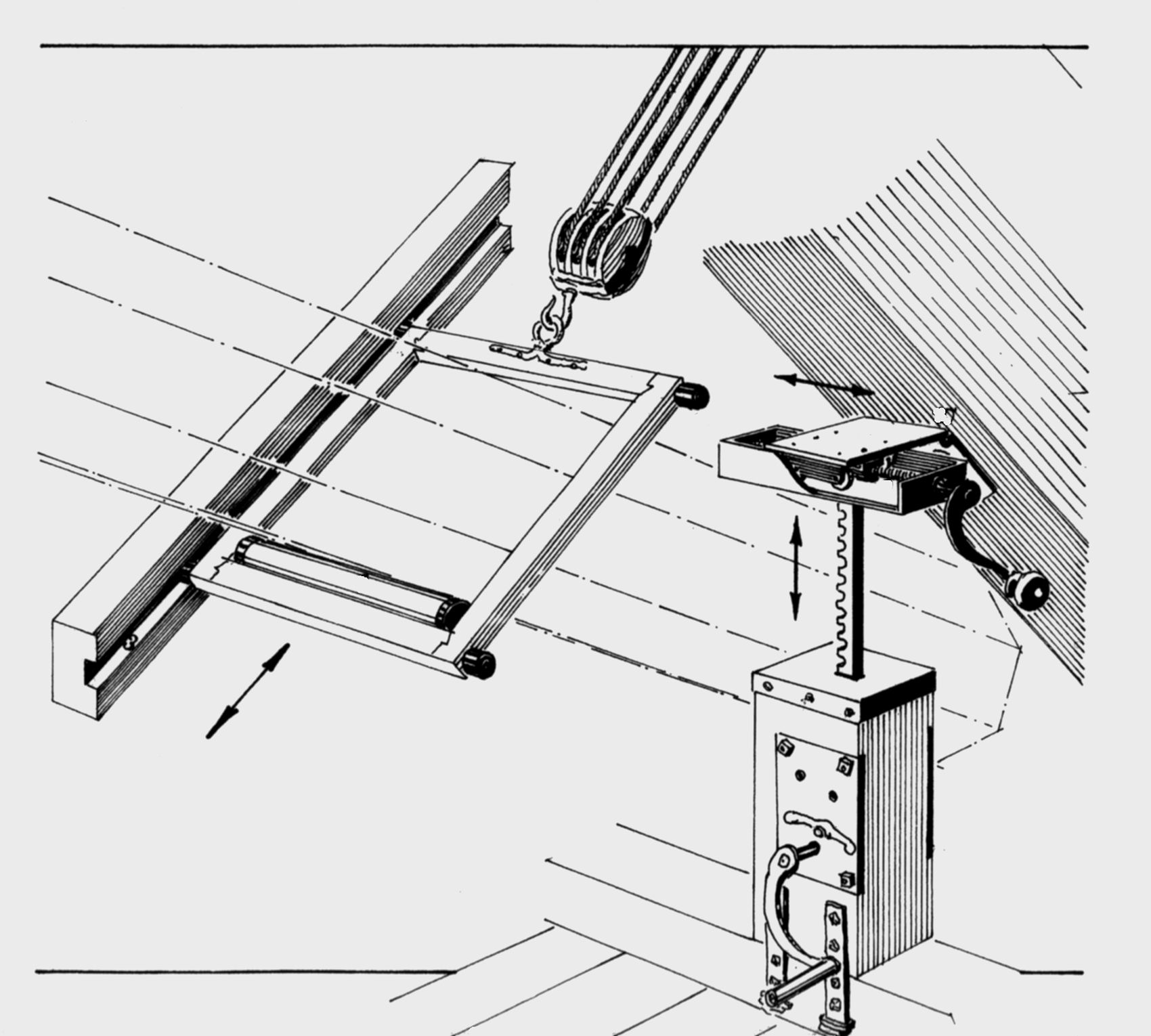
Lifting and positioning device on the Herschel telescope, drawing by Dr.-Ing. Felix Lühning
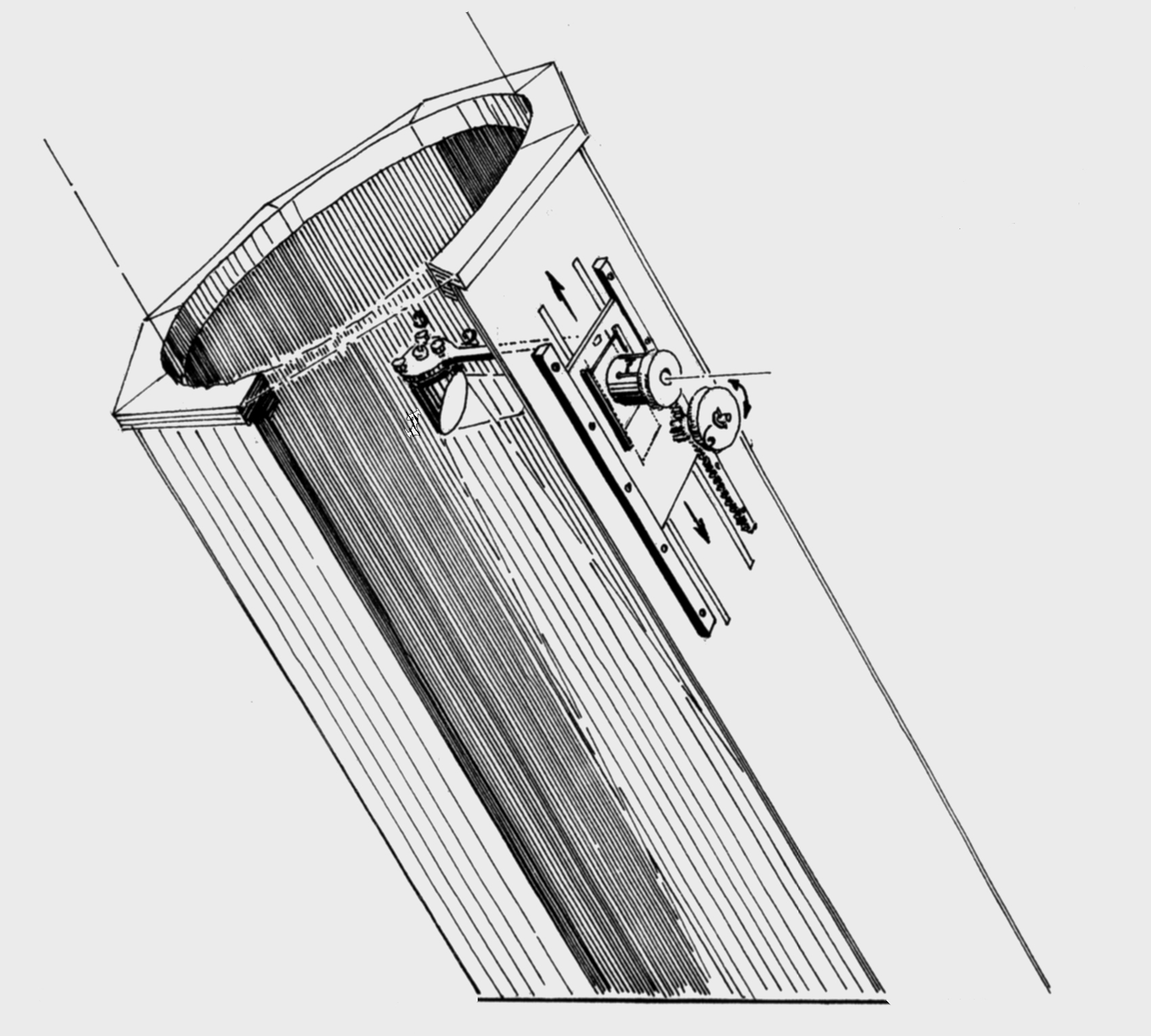
Eyepiece sled with secondary mirror holder on the Herschel telescope – Drawing by Dr.-Ing. Felix Lühning
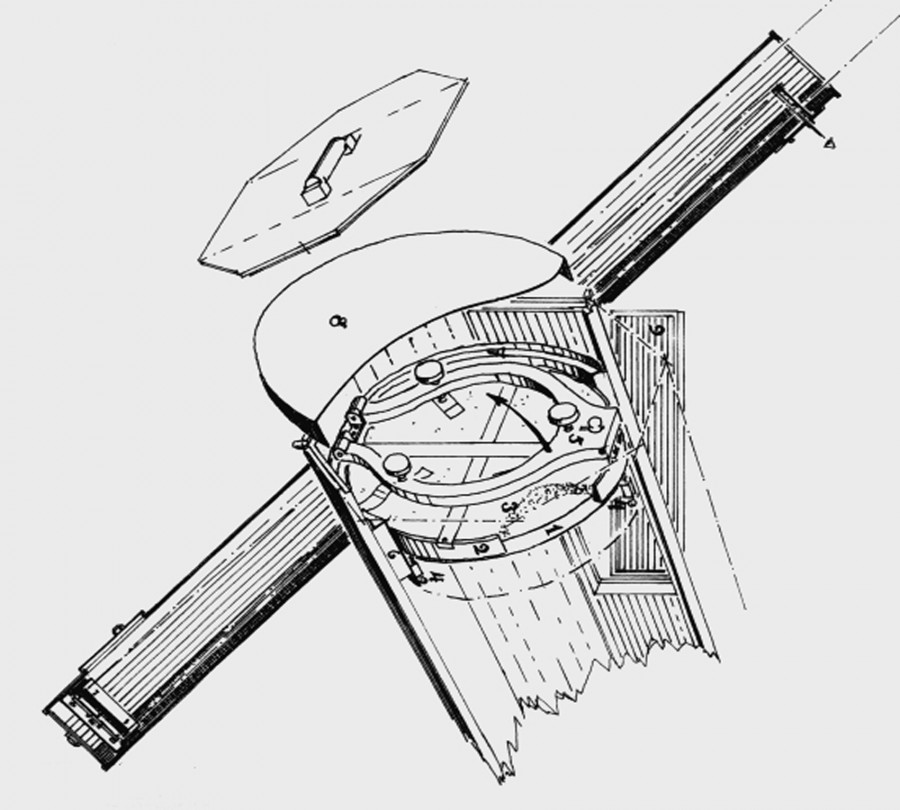
Primary mirror holder at the tube end of the Herschel telescope – Drawing by Dr.-Ing. Felix Lühning
Schrader’s “first masterpiece” is the 7-foot reflecting telescope built for Legationsrat C.J.W. von Knebel, the Hanoverian envoy at the Württemberg court in Karlsruhe. After a tumultuous history, it passed through the University of Jena, with connections to G.C. Lichtenberg and A. Kästner in Göttingen, Karl-Ludwig von Knebel, and Goethe and Schiller in Weimar. It has endured for centuries and was returned to its birthplace in Lilienthal for a one-year loan at the Congress of the Astronomical Society in Bremen and Lilienthal in 2000. In 2001, the author, together with a carpenter, created a functional replica.
In the period following Schrader’s stay, several reflecting telescopes were built in Lilienthal by the trained gardener Harm Gefken for princely houses, institutes, and private individuals. Additionally, the second mirror for the 27-foot telescope in the official garden in Lilienthal was ground. This doublet is now located in the Deutsches Museum in Munich.
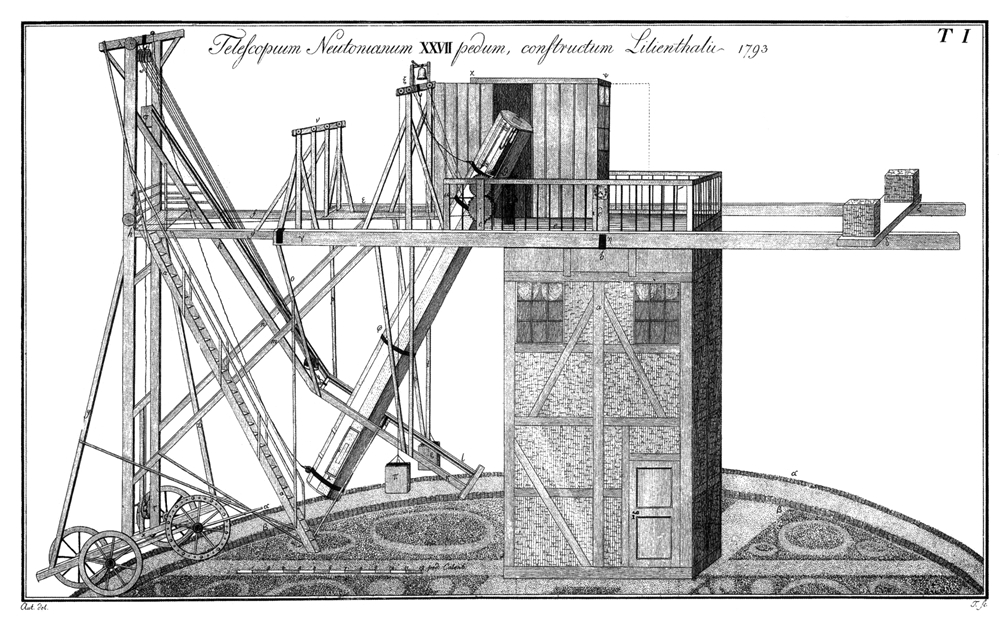
Drawing of the 27-foot telescope by J. H. Schroeter (1793)
The 27-foot telescope is a design of Schroeter’s own development, where he drew on the construction features of Herschel’s mount.
In the largest expansion phase of the observatory, more than ten telescopes were available to the observers.
H.J. Leue (translated)